
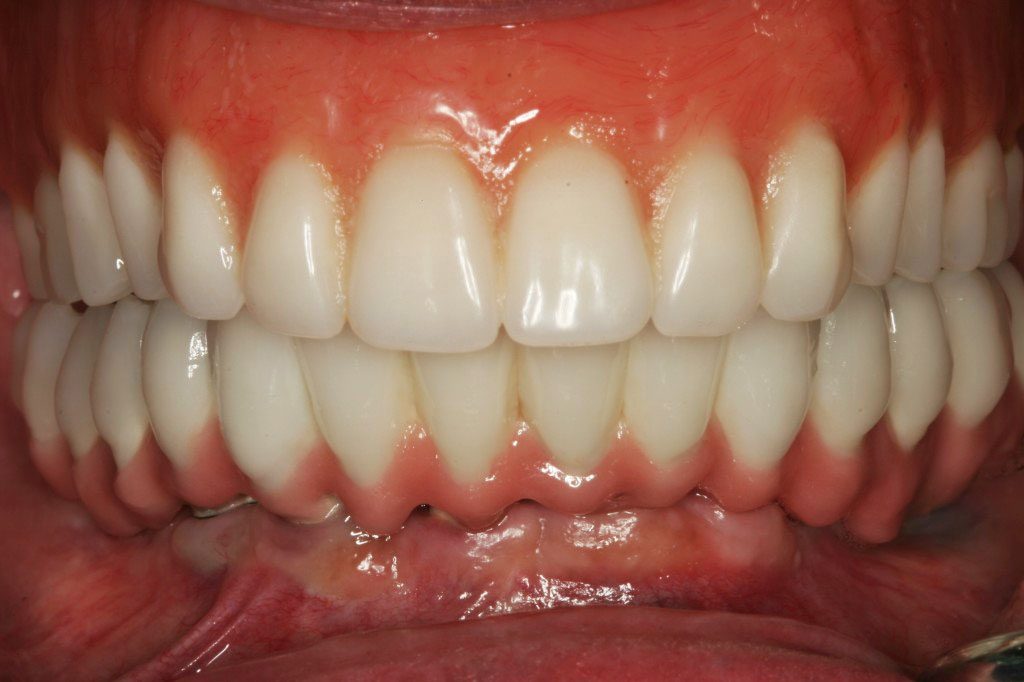
All-on-6 dental implants replace a full arch of teeth with a fixed bridge supported by six implants in the upper or lower jaw. The bridge is screwed onto the implants and is removed only by the dentist, so it feels and functions more like natural teeth than a removable denture. It suits people who have lost, or are about to lose, most teeth in an arch and who have enough bone for six implants, or can have bone grafting first.
In this guide
How All-on-6 works
The dentist places six implants spread across the arch. Once they are stable, a single full-arch bridge is attached to them with small screws. In many cases, a provisional (temporary) bridge is fitted on the day of surgery or within a few days, if the implants are firm enough. The final bridge is made after the bone has healed around the implants, commonly a few months later.
Spreading the load across six implants gives the bridge extra support compared with four, and if one implant has a problem, the remaining implants may still be able to support the bridge while it is managed.

All-on-6 versus other full-arch options
| Option | Implants per arch | Fixed or removable | Bone needs | Notes |
|---|---|---|---|---|
| All-on-6 | Six | Fixed | Moderate to good bone along the arch | More support, more surgery |
| All-on-4 | Four, back ones often tilted | Fixed | Can work with less bone at the back | Fewer implants; widely used |
| Implant-retained overdenture | Commonly two to four | Removable, clips on | Less demanding | Easier to clean; less like natural teeth |
| Conventional denture | None | Removable | Not applicable | Lowest cost; can be loose, especially lower |
| Zygomatic implants with a bridge | Varies, anchored in the cheekbone | Fixed | Used when upper jaw bone is severely lost | Specialist procedure |
Which option is right depends on your bone, bite, health, expectations and budget. Our implant vs bridge vs denture comparison explains the broader choices.
Ask to see a 3D scan of your own jaw with the planned implant positions. It makes the plan, and its limits, much easier to understand.
Who is a good candidate
You may be suitable if you:
- Have no teeth, or several failing teeth, in the upper or lower arch
- Struggle with a loose or uncomfortable denture
- Have enough bone for six implants, or are willing to have bone grafting
- Are in good enough general health for oral surgery
- Can commit to daily cleaning and regular maintenance visits
Discuss these carefully with your dentist and doctor
- Smoking or vaping, which increases implant failure and gum problems
- Diabetes, particularly if not well controlled
- Bone-affecting medicines such as some osteoporosis or cancer treatments
- Previous radiotherapy to the jaws
- Heavy grinding or clenching
- Blood thinners or bleeding disorders
The treatment journey
- Assessment and planning. Examination, photographs, a 3D CT scan and a discussion of the look you want.
- Surgery day. Remaining failing teeth are removed if needed, the bone is prepared and six implants are placed, usually under local anaesthetic with or without sedation.
- Provisional bridge. If the implants are stable enough, a temporary fixed bridge is attached the same day or shortly after. You will usually be advised to eat a soft diet during healing.
- Healing. The bone integrates with the implants over the following months.
- Final bridge. A stronger, more refined bridge is made and fitted, often in acrylic or composite on a metal framework, or in zirconia.
- Maintenance. Regular reviews and professional cleaning, sometimes with removal of the bridge by the dentist.
Recovery and red flags
Swelling, bruising and discomfort are common for several days after full-arch surgery. Your clinic will give specific instructions on pain relief, rinsing and diet.
Contact your dentist promptly if you notice:
- Pain or swelling that increases after the first few days
- Fever, pus or a bad taste that does not go away
- Numbness of the lip or chin that persists after the anaesthetic should have worn off
- A loose or cracked temporary bridge
Living with an All-on-6 bridge
Daily care
- Brush the bridge twice daily, including where it meets the gums
- Clean underneath with a water flosser, special floss or interdental brushes as shown by your hygienist
- Wear a night guard if advised, especially if you grind
- Keep every maintenance appointment
You can usually eat most foods with the final bridge, but very hard items such as ice, bones and hard nuts can chip the teeth on the bridge.
Choosing a clinic in the UAE
Full-arch treatment is a major investment and a complex procedure. Choose a clinic licensed by the DHA, DOH or MOHAP, and ask:
- How many full-arch cases has the team completed, and can I see examples?
- Who places the implants and who designs the final bridge?
- Which implant system and bridge material do you use?
- What is included: extractions, grafting, sedation, temporary and final bridges, follow-ups?
- What happens if an implant fails or the bridge breaks?
Prices vary widely between clinics and with the materials used, and many insurance plans do not cover full-arch implants. Get detailed written quotes and take time to compare.
Frequently asked questions
Is All-on-6 better than All-on-4?
Neither is better for everyone. Six implants spread the load more and add redundancy, while All-on-4 can avoid grafting in some patients with less bone. Your scan and bite decide.
Can I have teeth on the same day?
Many patients receive a provisional fixed bridge on the day or within days, if the implants are stable enough. The final bridge comes later.
How long does an All-on-6 bridge last?
With good care and maintenance, implants can last many years. The bridge itself may need repairs or replacement over time, depending on the material and your bite.
Does All-on-6 hurt?
Surgery is done under anaesthesia, often with sedation. Soreness and swelling afterwards are expected and usually managed with medication and rest.
Sources: American Dental Association: MouthHealthy, NHS: Dental implants, Dubai Health Authority
Cover photo: Danjhon, CC BY-SA 4.0. Last reviewed: 2026-11-25. General information only, not medical advice. Please consult a licensed practitioner in the UAE about your own situation.
Leave a Reply