
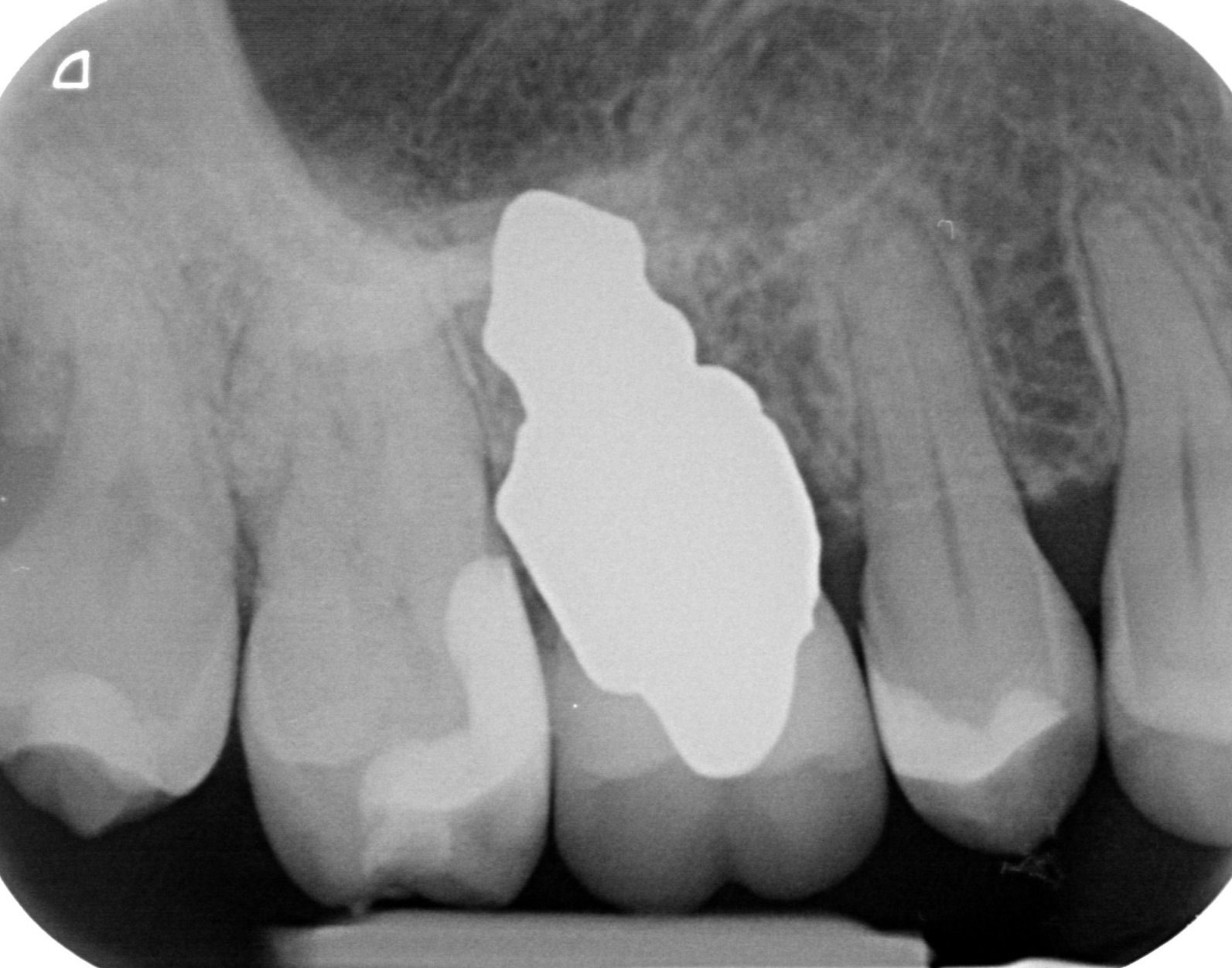
All-on-four dental implants replace a full arch of teeth with a fixed bridge supported by four implants: two placed upright near the front of the jaw and two placed at an angle further back. The angled design often avoids the need for bone grafting, and in many cases a temporary fixed bridge can be fitted within a day or so of surgery. It is a major treatment, so careful assessment matters.
In this guide
How the all-on-four concept works
Instead of placing one implant for every missing tooth, the all-on-four approach uses four implants to anchor a complete arch of replacement teeth.
The two back implants are tilted so they can be longer and reach denser bone, while steering clear of the sinuses in the upper jaw and the nerve in the lower jaw. That tilt is a big reason the method can work for people who have lost some bone.
Who it is designed for
All-on-four is usually considered for people who:
- have lost most or all teeth in one or both jaws
- have teeth that are failing and cannot be saved
- are tired of loose removable dentures
- want fixed teeth they do not take out at night
- have enough bone in the front and middle of the jaw for the implants
It is not the right choice for someone missing only one or a few teeth. In those cases single implants or bridges are more common. Our implant vs bridge vs denture comparison explains the options.
All-on-four compared with other full-arch options
| Option | Number of implants | Fixed or removable | Bone grafting | Main trade-off |
|---|---|---|---|---|
| Conventional full denture | None | Removable | Not needed | Can be loose, covers the palate |
| Implant-retained overdenture | Often 2 to 4 | Removable, clips on | Sometimes | More stable than a denture, still removed for cleaning |
| All-on-four | 4 | Fixed | Often avoided | Fewer back-up implants if one fails |
| All-on-six | 6 | Fixed | Sometimes needed | More support, more surgery and cost |
| Individual implants and bridges | Often 6 to 10 | Fixed | Often needed | Most like natural teeth, longest treatment |
Our separate guide to all-on-6 dental implants explains when extra implants are preferred.
The treatment journey
- Assessment: examination, 3D scan (CBCT), photos and medical history.
- Planning: digital planning of implant positions and the shape of the new teeth.
- Extractions and implant surgery: remaining teeth are removed if needed and the four implants placed, usually under local anaesthesia with or without sedation, or general anaesthesia.
- Temporary bridge: if the implants are stable enough, a fixed temporary bridge is often attached the same day or within a few days.
- Healing: the implants fuse with the bone over a period of months, commonly about three to six.
- Final bridge: a stronger final bridge is made, often from zirconia or acrylic on a metal frame.
- Maintenance: regular check-ups and professional cleaning.
“Teeth in a day” usually means temporary teeth in a day. The final bridge comes months later.
Risks and possible complications
Talk these through with your surgeon
- Swelling, bruising and discomfort after surgery
- Infection around implants
- Implant failure to integrate, which may require replacement
- Nerve injury in the lower jaw, causing numbness, which is uncommon with proper planning
- Sinus problems in the upper jaw
- Fracture or wear of the bridge, especially with grinding
- Peri-implantitis, a gum and bone infection around implants that can develop years later
Seek urgent care for heavy bleeding that does not stop with pressure, spreading swelling, fever, or difficulty swallowing or breathing.
Who may need extra caution
- Smokers, as smoking is linked with higher implant failure rates
- People with uncontrolled diabetes
- Those who have had radiotherapy to the jaws
- People taking certain bone medicines, such as some used for osteoporosis or cancer
- Anyone with poor oral hygiene or a history of gum disease that is not under control
These do not always rule treatment out, but they need careful planning with your dentist and doctor.
Looking after an all-on-four bridge
Daily care
- Brush the bridge and gums twice a day with a soft brush
- Use a water flosser, interdental brushes or special floss under the bridge
- Attend professional cleanings, which may involve removing the bridge periodically
- Wear a night guard if you grind
- Avoid biting very hard objects with the front teeth
Choosing a clinic in the UAE
Full-arch implant treatment should be carried out by an experienced implant surgeon and restorative dentist, often working as a team. Check licences with the DHA in Dubai, DOH in Abu Dhabi or MOHAP in the other emirates, ask how many full-arch cases they do, and request to see cases at least a year after completion. Costs vary widely depending on materials, sedation, scans and the clinic. Get a written plan that covers the temporary and final bridges and any maintenance visits. Our Costs in the UAE section explains typical pricing structures.
Frequently asked questions
How long do all-on-four implants last?
With good care, implants can last many years, and some people keep them for decades. Bridges may need repair or replacement over time.
Is all-on-four painful?
Surgery is done with anaesthesia. Afterwards, swelling and discomfort are common for several days and are usually managed with medicines your surgeon advises.
Can all-on-four be done on both jaws?
Yes, upper and lower arches can be treated, sometimes on the same day.
Is all-on-four better than dentures?
Many people find fixed teeth more comfortable and stable, but it involves surgery and higher cost. A dentist can help you weigh the options.
Sources: American Academy of Implant Dentistry, American Dental Association, Dubai Health Authority
Cover photo: Logicwhatelse, CC BY-SA 4.0. Last reviewed: 2026-11-25. General information only, not medical advice. Please consult a licensed practitioner in the UAE about your own situation.
Leave a Reply