
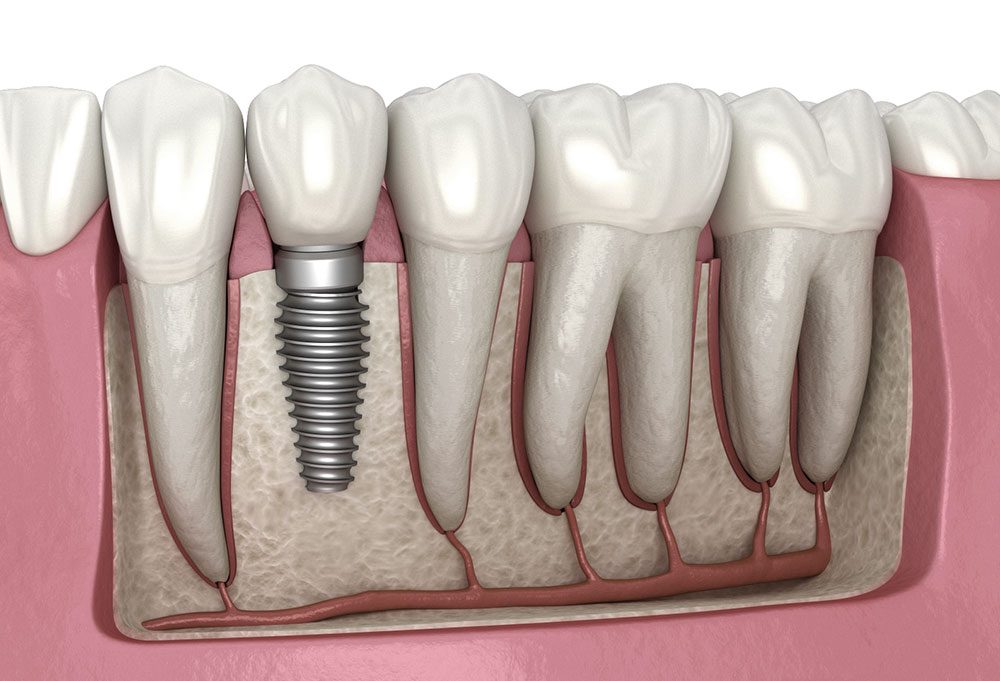
A dental implant crown is the visible, tooth-shaped part of an implant. It attaches to a connector called an abutment, which links it to the implant post in the jawbone. Crowns can be screwed or cemented in place and are usually made from zirconia, lithium disilicate or porcelain fused to metal. With good care they can last many years, though the crown may need replacing before the implant itself.
In this guide
The three parts of an implant tooth
| Part | Where it sits | What it does |
|---|---|---|
| Implant (fixture) | In the jawbone | Acts like a root, fuses with bone over time |
| Abutment | Just above or at the gum | Connects the implant to the crown |
| Crown | Above the gum | The visible tooth you bite and smile with |
Sometimes the abutment and crown are made as one piece and screwed directly into the implant. Our implant vs bridge vs denture comparison explains how implants compare with other ways of replacing teeth.
Screw-retained versus cement-retained crowns
| How it is fixed | A small screw through the crown into the implant or abutment, hole sealed with filling material | Cemented onto the abutment like a normal crown |
|---|---|---|
| Retrievability | Easy for the dentist to remove for repair or cleaning | Harder to remove without damage |
| Appearance | A small filled access hole, usually on the biting or back surface | No access hole |
| Risk of leftover cement under the gum | None | Possible, and linked to gum inflammation around implants |
| Typical use | Increasingly common, especially at the back of the mouth | Used where implant angle makes screw access difficult |
Both work well. Many dentists prefer screw-retained crowns where the implant angle allows, because they are easier to maintain.
Crown materials
- Zirconia: very strong and tooth-coloured, popular for back teeth and increasingly for front teeth in more translucent forms.
- Lithium disilicate: very good appearance, strong enough for many front-tooth crowns, often bonded to a titanium base.
- Porcelain fused to metal: long track record, though the metal can show as a dark line if gums recede.
- Full metal (gold alloys): very durable, rarely chosen today for visible teeth.
The best material depends on where the tooth is, how hard you bite and how visible it is when you smile.
How the crown is made and fitted
- Healing period. After implant placement, the bone usually needs a few months to integrate with the implant. In some cases a temporary crown is fitted early.
- Shaping the gum. A healing cap or temporary crown helps the gum form a natural contour.
- Impression or scan. A special scan body or impression post records the implant’s exact position.
- Lab work. The abutment and crown are designed, often digitally, and made to match nearby teeth.
- Fitting. The crown is tried in, checked for fit, contact and bite, then screwed or cemented.
- Review. The bite is checked again, and an X-ray may be taken to confirm fit.
Caring for an implant crown
Implant crowns cannot decay, but the gum and bone around them can become inflamed. That condition, peri-implantitis, can lead to bone loss and, eventually, implant failure. Cleaning is essential.
Daily care for implant crowns
- Brush twice a day with a soft brush, angling bristles towards the gumline
- Clean between teeth daily with floss, implant floss or interdental brushes
- A water flosser can help around implants
- Attend regular check-ups and professional cleaning
- Wear a night guard if you grind or clench
- Avoid chewing ice or very hard objects
Common problems and what they mean
Contact your dentist if you notice
- a crown that feels loose or moves, which can mean a loose screw
- bleeding, swelling or pus around the implant
- pain when biting
- a chipped or cracked crown
- a gap or food trapping next to the implant crown
- a metallic taste or a bad smell near the implant
A loose crown is often a quick fix if caught early; leaving it can damage the screw or implant.
Smokers and people with diabetes or a history of gum disease have a higher risk of implant problems and need especially careful maintenance.
How long does an implant crown last?
With good care, implant crowns often last many years. The crown is more likely to need replacing than the implant, because porcelain can chip and wear over time. Screw-retained crowns make replacement simpler, because the crown can be removed without disturbing the implant.
Cost and planning in the UAE
The cost of an implant crown varies with the material, the type of abutment (stock or custom), the lab and the clinic. Some quotes include the implant, abutment and crown together; others list them separately. Ask for a written plan that clearly shows:
- implant surgery
- abutment type
- crown material
- temporary crowns, if any
- follow-up visits and X-rays
Our Costs in the UAE section explains typical pricing, and our guides to dental implants in Dubai and Abu Dhabi cover local considerations. In the UAE, choose a dentist licensed by the DHA in Dubai, DOH in Abu Dhabi or MOHAP in the other emirates.
Frequently asked questions
Can an implant crown be replaced without removing the implant?
Yes. A damaged crown can usually be replaced while the implant stays in place, especially if it is screw-retained.
Does an implant crown look like a real tooth?
A well-made crown matched to your other teeth can look very natural. Gum shape around the implant also affects the result.
Can an implant crown get cavities?
No, but the gum and bone around the implant can become infected if plaque builds up, so cleaning is just as important as with natural teeth.
Can I whiten an implant crown?
No. Crown materials do not respond to whitening. If you plan to whiten, do it before the crown shade is chosen.
Sources: American Academy of Implant Dentistry, American Dental Association, Dubai Health Authority
Cover photo: Alexmit art, CC BY-SA 4.0. Last reviewed: 2026-11-25. General information only, not medical advice. Please consult a licensed practitioner in the UAE about your own situation.
Leave a Reply