
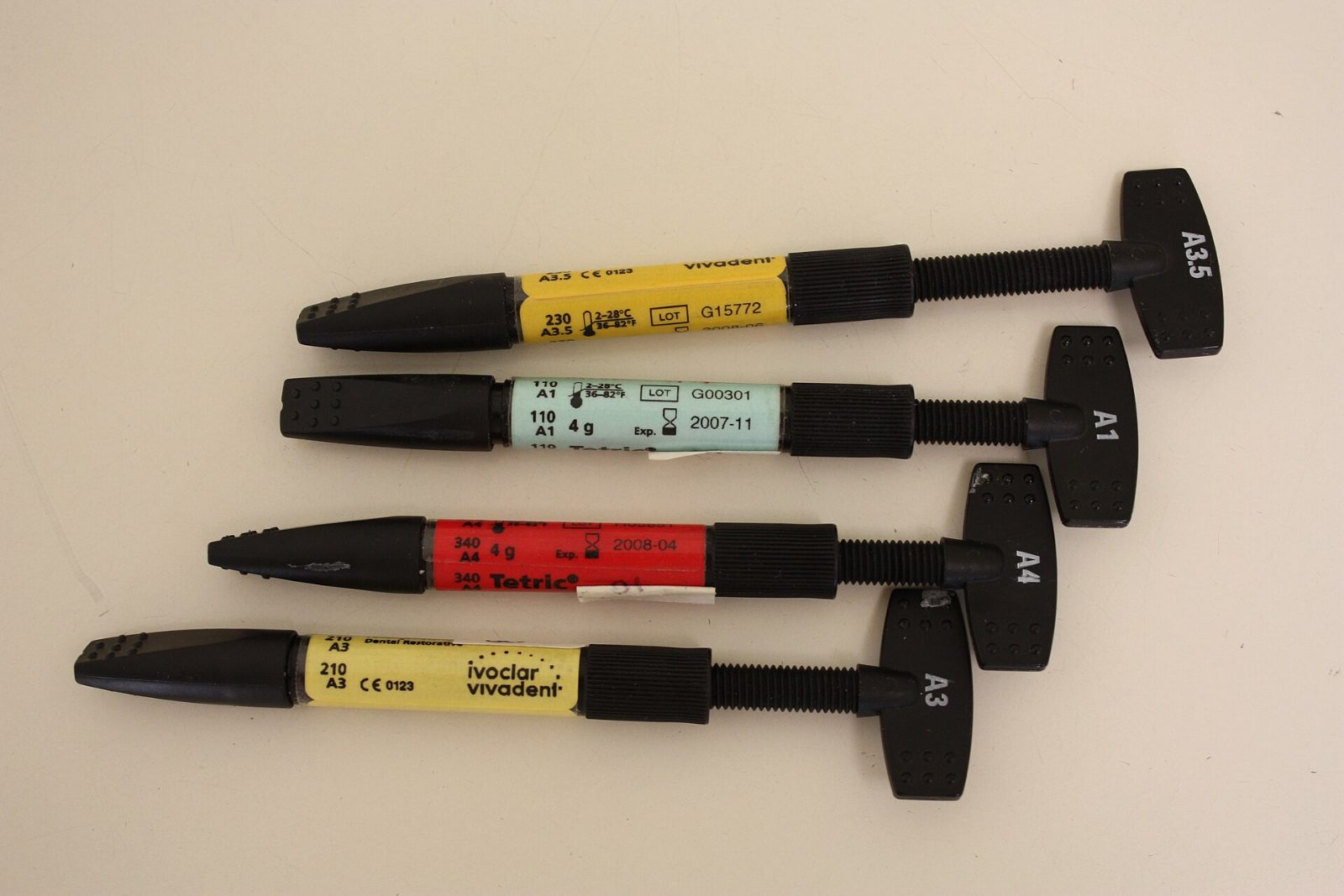
Composite veneers in Dubai are tooth-coloured resin layers that a dentist sculpts directly onto the front of your teeth, usually in a single long appointment, to improve colour, shape or small gaps. They tend to cost less than porcelain and often need little or no enamel removal, but they stain and wear more easily, so they need polishing and occasional repairs.
In this guide
Direct and indirect composite veneers
Most people searching for composite veneers in Dubai are looking for direct composite veneers. The dentist builds up resin on each tooth, shapes it by hand, cures it with a blue light and polishes it, all in the chair.
Indirect composite veneers are made outside the mouth, in a lab or with a milling machine, and then bonded on in a second visit. They can be more uniform but lose some of the main advantages of the direct method, which are speed and the ability to avoid drilling.
How they compare with porcelain
| Appointments | Usually one | Usually two or more |
|---|---|---|
| Tooth preparation | Minimal to none in many cases | Usually a thin layer of enamel removed |
| Colour stability | Picks up stains over time | Very stable |
| Surface shine | Needs periodic polishing | Keeps its glaze |
| Fixing chips | Often repaired in the chair | Usually replaced |
| Reversibility | Sometimes, if enamel was not removed | Not reversible |
| Cost | Generally lower | Generally higher |
For the full range of materials, see our veneer materials comparison.
Composite is often the better first step when you are not sure about a permanent change, because it can frequently be adjusted or removed without having cut into healthy enamel.
Who composite veneers suit
Composite tends to work well for:
- Small chips and uneven edges on front teeth
- Closing small gaps, including a gap between the two front teeth
- Masking mild discolouration when whitening has not been enough
- Younger adults who want to avoid irreversible tooth preparation
- People who want to “test drive” a new smile shape before deciding on porcelain
It is less suitable for heavily stained teeth, where resin may not hide the colour well, and for people with heavy bite forces or grinding, where chips and wear are more likely.
Treat these first, or reconsider
- Untreated tooth decay or gum disease
- Grinding or clenching without a night guard
- Crowded or rotated teeth that orthodontics could correct
- Large failing fillings on the same teeth
- Smoking, which stains resin faster
What the appointment looks like
- Assessment and planning. The dentist checks your teeth and gums, takes photographs and often X-rays. Some clinics in Dubai use digital smile design to preview shapes.
- Shade matching. Composite comes in many shades. Shade is normally chosen with teeth hydrated at the start, since teeth lighten slightly when they dry out.
- Surface preparation. The enamel is cleaned and gently roughened or etched so the resin can bond. Drilling is often not needed.
- Layering. Resin is applied in thin layers, each cured with light, to build natural translucency at the edges.
- Shaping and polishing. The dentist shapes each veneer, checks your bite and polishes to a shine.
Many people need no anaesthetic at all for this. Depending on the number of teeth, the session can take several hours, so ask in advance and plan your day around it.

Dubai specifics
Dental clinics in Dubai are licensed by the Dubai Health Authority, and individual dentists hold DHA professional licences that can be checked through the authority’s services. If you live in another emirate, Abu Dhabi clinics are regulated by the Department of Health and the northern emirates by MOHAP.
On cost, prices for composite veneers in Dubai vary widely by clinic, dentist experience and the number of teeth. Quotes are usually per tooth, and some clinics bundle a scale and polish or whitening. Ask for a written plan that states:
- Number of teeth to be treated
- Whether any enamel will be removed
- What follow-up polishing visits are included
- The policy if a veneer chips in the first months
Insurance plans in the UAE generally treat veneers as cosmetic, so they are often not covered. Check your own policy.
Making composite last longer
- Rinse with water after coffee, tea and karak, and avoid smoking
- Have the veneers professionally polished at hygiene visits
- Wear a night guard if you clench or grind
- Avoid biting hard objects such as ice, pens or shells
- Use a non-abrasive toothpaste; harsh whitening pastes dull resin
Repairs, refreshes and replacement
One practical advantage of composite is that small problems can usually be fixed without starting again. A chipped edge can often be roughened, rebuilt with fresh resin and polished in a short visit, and a dull surface can be brought back with professional polishing. Over the years, though, the resin gradually absorbs stains and loses some of its shine, and many people eventually choose to have the veneers fully refreshed or to move to porcelain.
It helps to think of composite veneers as a treatment with a maintenance plan rather than a one-off purchase. When you compare quotes, consider:
- How often the clinic recommends polishing visits, and whether they are charged separately
- What a typical repair costs compared with the original veneer
- Whether the dentist who placed the veneers will be the one repairing them
- How removal or conversion to porcelain would be handled if you change your mind later
Keeping your own photographs from the day of treatment also makes it easier to judge changes in colour and shape over time and to discuss them with your dentist.
Frequently asked questions
How long do composite veneers last?
It depends on your bite, habits and maintenance. They usually need touch-ups sooner than porcelain, and many people replace or refresh them after some years. Ask your dentist for a realistic estimate for your teeth.
Do composite veneers damage teeth?
In many cases little or no enamel is removed, which is a key advantage. The bonding process itself leaves a lightly etched surface, so removal later still needs a dentist.
Can composite veneers be whitened?
No. Whitening products do not change the colour of resin. If you want whiter natural teeth, whiten before the veneers are matched.
Can I eat normally afterwards?
Yes, once you leave the clinic. Be mindful of strongly coloured foods and drinks in the first couple of days, and avoid biting very hard foods with the front teeth.
Sources: American Dental Association: MouthHealthy, Dubai Health Authority, NHS: Cosmetic dentistry
Last reviewed: 2026-11-25. General information only, not medical advice. Please consult a licensed practitioner in the UAE about your own situation.
Leave a Reply