
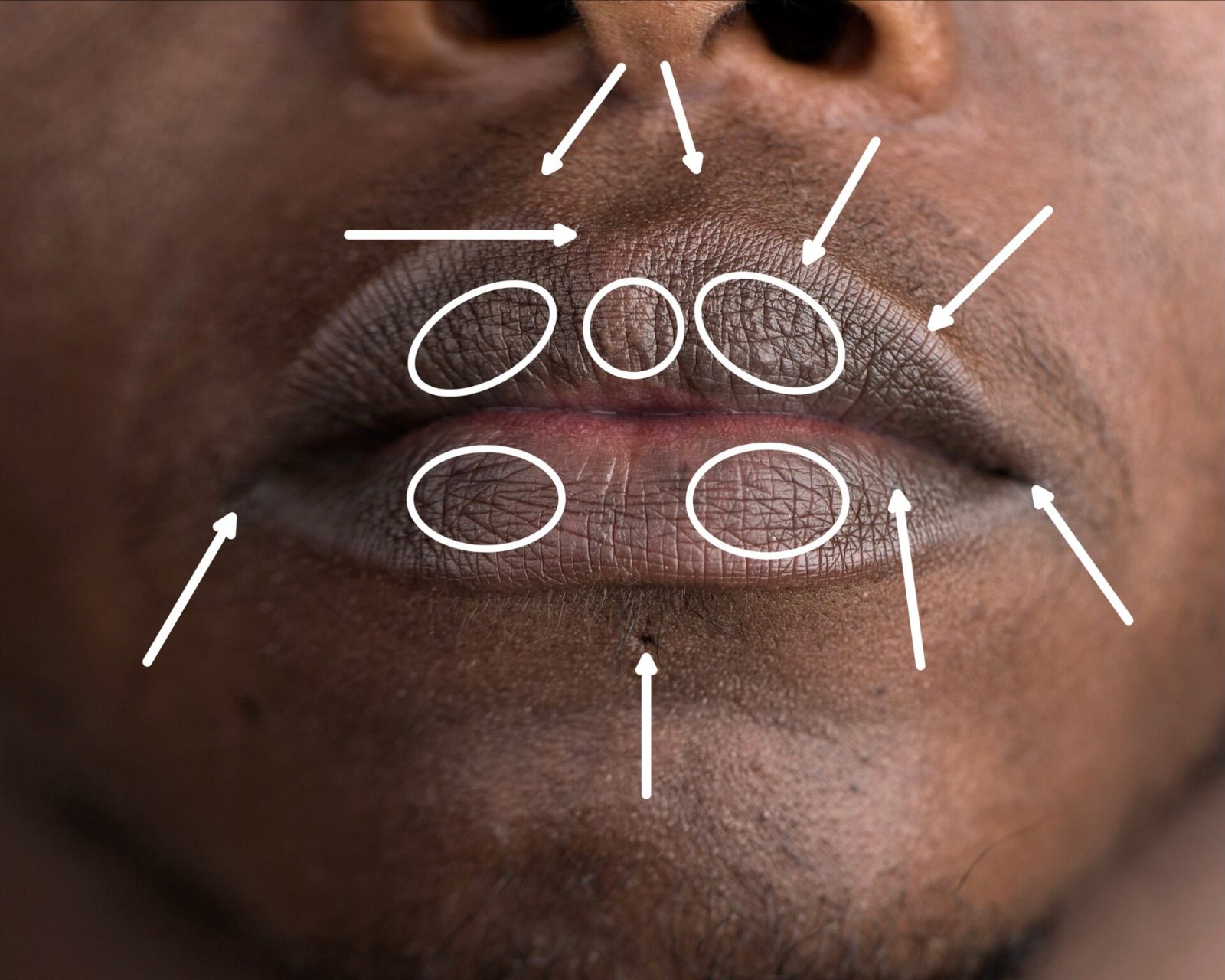
Swelling after lip filler is normal and usually follows a predictable pattern: it is most noticeable in the first 24 to 72 hours, eases clearly by the end of the first week, and has mostly settled by around two weeks. That is why practitioners ask you to wait about two weeks before judging the result or asking for more product.
In this guide
Why lips swell so much
Lips have a rich blood supply and very loose tissue, so they react strongly to any injection. Several things add up: the needle or cannula itself causes a small injury, the tissue responds with inflammation, and hyaluronic acid draws water into the area. The more injection points and the more product used, the more swelling most people get. Some people simply swell more than others, and the same person can react differently from one treatment to the next.
The stages at a glance
| Stage | What you may notice | What usually helps |
|---|---|---|
| Hours 0 to 6 | Lips look full, numb from anaesthetic, small red dots at injection sites | Cool compress wrapped in a cloth, staying upright |
| Day 1 to 2 | Swelling peaks; lips can look uneven, tight or shiny; bruises may appear | Rest, cool compresses in short sessions, avoid heat and exercise |
| Day 3 to 5 | Swelling clearly reduces; firm spots or small lumps may be felt | Gentle care, normal hydration, no massage unless advised |
| Day 6 to 10 | Shape becomes more even; bruises fade from purple to yellow | Normal routine, still avoid heavy pressure on lips |
| Day 11 to 14 | Close to the final result; product feels softer | Review appointment to assess shape |
Every person heals differently, so treat these stages as a guide rather than a schedule.
Day by day in more detail
The first day
Right after treatment your lips often look larger than you expected. The local anaesthetic wears off within a few hours, and you may feel tenderness or a tight sensation. Asymmetry is common at this point: one side may swell more because more injections were placed there, or simply because of how you slept or held a cold pack.
Days two and three
Many people find the second morning the most dramatic. Swelling after lying flat overnight can be at its peak. Bruises may become more visible. This is when it is easiest to panic about the result, and also when it is least representative of it.
Days four to seven
Swelling usually reduces noticeably, and the lip border starts to look sharper. You might feel small firm areas when you press your lips together. Many of these soften as the gel integrates into the tissue. Some practitioners give specific instructions on gentle massage for a lump; follow their advice rather than general internet tips.
The second week
By around day ten to fourteen, most of the swelling is gone. This is the point at which shape, symmetry and size can be fairly assessed. If anything still looks uneven, the review appointment is the time to discuss a small adjustment or, if needed, dissolving.
What helps swelling settle
- Cool compresses for short periods, always wrapped in a cloth, never ice directly on skin
- Sleeping with your head slightly raised for the first night or two
- Avoiding saunas, steam rooms, hot yoga and long periods outdoors in the summer heat for the first couple of days
- Skipping strenuous exercise for 24 to 48 hours
- Limiting alcohol for the first day, as it can increase swelling and bruising
- Being gentle when eating, drinking and brushing your teeth

What is not normal
Swelling should get better day by day after the first two or three days. Some signs need attention:
Contact your practitioner or seek urgent care if you notice
- Pale, white, grey, blue or blotchy patches on the lip or nearby skin
- Pain that becomes more intense instead of easing
- Blisters or scabs that appear in the days after treatment
- Heat, increasing redness, pus or fever, which can signal infection
- Swelling of the tongue, throat or face, or difficulty breathing, which may be an allergic reaction and needs emergency care
- Any change in vision
Cold sores can also appear after lip filler in people who carry the virus. If you have had them before, tell your practitioner in advance; they may suggest antiviral medicine prescribed by a doctor.
Planning around swelling in the UAE
Because the second and third days can look the most dramatic, timing matters. Many people in the UAE book on a Thursday or Friday so the worst swelling falls over the weekend. Avoid planning treatment right before a wedding, an important event, photos, or a flight; most practitioners suggest leaving at least two weeks before big occasions.
Summer heat can make swelling feel worse. Plan indoor days if possible, keep sunscreen on any bruised skin, and keep a cool drink close by rather than spending long periods outdoors at midday.
Make sure your treatment is done by a practitioner licensed by the Dubai Health Authority (DHA), the Department of Health Abu Dhabi (DOH) or the Ministry of Health and Prevention (MOHAP), depending on the emirate. A licensed clinic will give you written aftercare advice and a contact number for concerns.

Who tends to swell more
Some factors are linked with more swelling and bruising:
- First-time lip treatment, compared with top-ups
- Higher volume in a single session
- Many injection points, as in some shaping techniques
- Blood-thinning medicines or supplements; do not stop prescribed medicine without your doctor’s advice
- A history of strong reactions to previous fillers
Judge your lips at two weeks, not two days.
Frequently asked questions
Is it normal for one lip to swell more than the other?
Yes. Uneven swelling is common in the first days and often relates to where more injections were placed. If the difference remains after two weeks, raise it at your review.
Can I take anything to reduce swelling?
Ask your practitioner or pharmacist before taking any medicine. Some pain relievers can increase bruising, and your clinic may have a preferred option.
When can I wear lipstick?
Many practitioners advise waiting at least a day so the small injection points can close. Use clean products and avoid pressing hard on the lips.
How do I know whether a lump is swelling or filler?
Swelling tends to feel soft and diffuse and goes down over days. A small, firm lump that persists after two weeks may be product; your practitioner can assess it.
Thinking about the teeth behind the smile too? See our veneer materials comparison.
Sources: NHS: Dermal fillers, U.S. FDA: Dermal fillers, Department of Health Abu Dhabi
Cover photo: VVVBoldrini, CC BY-SA 4.0. Last reviewed: 2026-11-26. General information only, not medical advice. Please consult a licensed practitioner in the UAE about your own situation.
Leave a Reply